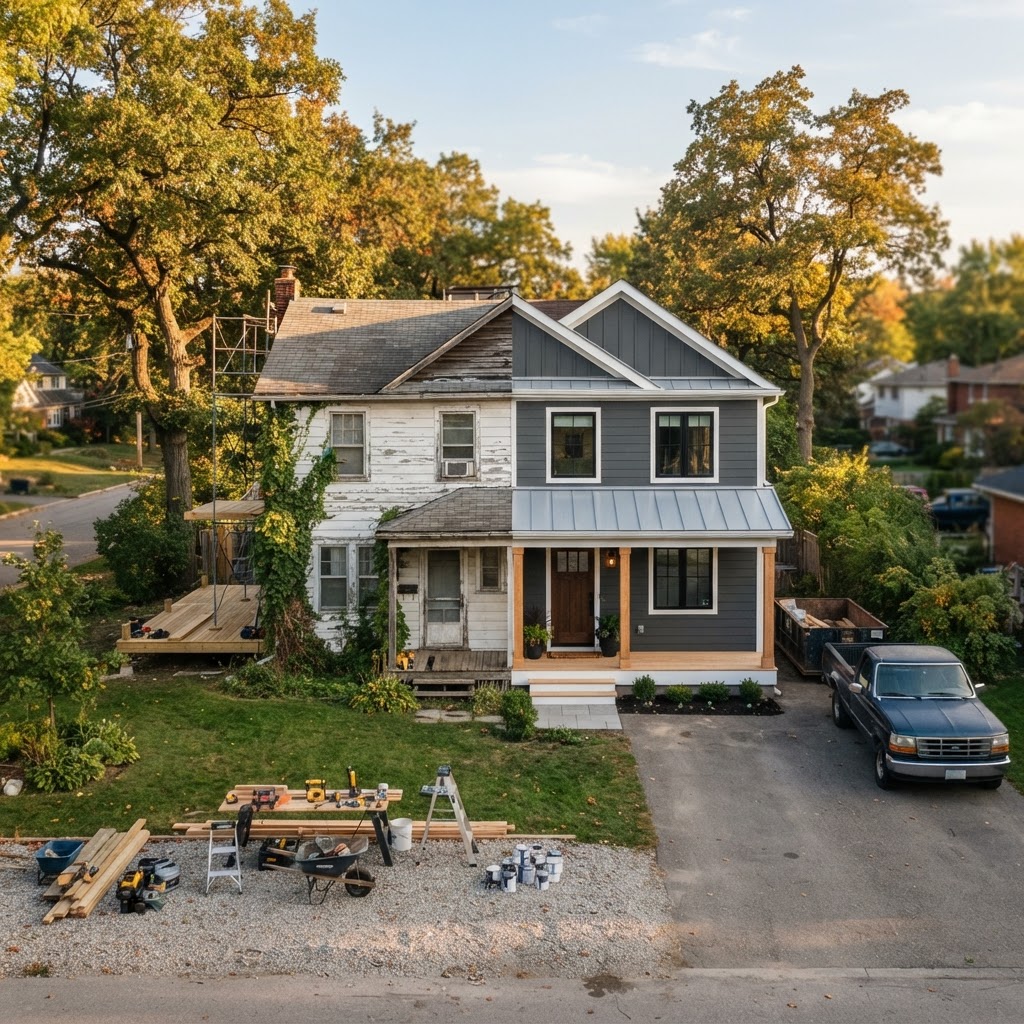
Finding the perfect move-in-ready home is incredibly difficult in tight housing markets. Many buyers are turning their attention to older properties that need significant cosmetic or structural work.
If you lack the cash to pay for major repairs out of pocket, an FHA 203(k) renovation loan is the perfect solution. This unique mortgage program allows you to finance both the purchase price of the home and the cost of necessary renovations into one single monthly payment.
Whether you are looking at an outdated property in Roseville or a historic home in Georgia, this program opens up new possibilities. We see this constantly with buyers who want to build equity quickly by improving a distressed property.
What is an FHA 203(k) renovation loan?
An FHA 203(k) renovation loan is a government-backed mortgage that combines the purchase price of a home and the cost of its repairs into a single loan. It allows homebuyers to finance renovations upfront, paying them off gradually over the life of the mortgage.
This program is insured by the Federal Housing Administration (FHA). Because the government backs the loan, lenders can offer favorable terms to borrowers who might not qualify for traditional construction financing.
Instead of taking out a high-interest personal loan or draining your savings, you roll the construction costs into your primary mortgage. The loan amount is based on the projected value of the home after the repairs are completed.
Standard vs. Limited 203(k) Programs
There are two distinct versions of this loan program. Choosing the right one depends entirely on the scope and cost of your planned renovations.
| Feature | Limited 203(k) | Standard 203(k) |
|---|---|---|
| Maximum Repair Cost | $35,000 | No strict limit (subject to local FHA loan limits) |
| Structural Repairs Allowed? | No | Yes |
| Minimum Repair Cost | None | $5,000 |
| HUD Consultant Required? | No | Yes |
The Limited 203(k) is ideal for simple cosmetic upgrades like new flooring, fresh paint, or replacing kitchen appliances. The Standard 203(k) is required if you are moving load-bearing walls, fixing foundation issues, or adding a new room.
Key Takeaway
The FHA 203(k) loan transforms a property's future potential into immediate purchasing power, letting you buy and rehab a home with one closing process.
How much down payment do you need for an FHA 203(k) loan?
You need a minimum down payment of 3.5% for an FHA 203(k) loan, provided your credit score is at least 580. This 3.5% is calculated based on the total acquisition cost, which includes the purchase price plus the estimated renovation expenses.
For example, if you buy a home for $300,000 and plan to do $50,000 in repairs, your total acquisition cost is $350,000. Your 3.5% down payment would be $12,250.
This low down payment requirement makes the program highly accessible for first-time homebuyers. It is one of the most affordable ways to enter the real estate market while customizing a home to your exact tastes.
Credit Score and Debt-to-Income Requirements
While the FHA allows credit scores as low as 580 for maximum financing, individual lenders may impose stricter overlays. Many lenders prefer a score of 620 or higher for renovation loans due to the added complexity.
Your debt-to-income (DTI) ratio also plays a critical role in your approval. Generally, your total monthly debt payments should not exceed 43% of your gross monthly income.
If you have a higher credit score and a larger down payment, you might also want to explore conventional loans like the Fannie Mae HomeStyle Renovation loan. We can help you compare both options to see which yields the best terms.
Pro Tip
Always get pre-approved before shopping for fixer-uppers. Knowing your maximum total acquisition cost ensures you do not fall in love with a property that requires more repairs than you can finance.
What repairs are allowed under an FHA 203(k) loan?
An FHA 203(k) loan allows for a wide variety of repairs, including roof replacement, HVAC upgrades, plumbing and electrical modernization, and complete kitchen or bathroom remodels. The primary requirement is that the repairs must improve the safety, livability, or energy efficiency of the home.
You can also use the funds to eliminate health and safety hazards, such as lead-based paint or mold. Accessibility improvements for disabled persons are fully eligible as well.
Even exterior upgrades like new siding, decks, and patios are permitted. The flexibility of the Standard 203(k) program means you can practically rebuild a home from the foundation up.
Ineligible Luxury Improvements
While the program is generous, the FHA strictly prohibits using these funds for "luxury" items. You cannot use a 203(k) loan to install a new swimming pool, build an outdoor kitchen, or add a tennis court.
However, if the property already has a swimming pool that is in disrepair, you can use the funds to repair it. The goal of the program is to restore properties to a safe and habitable condition, not to fund extravagant lifestyle additions.
Real Example
A recent buyer in Sacramento found a severely outdated home in a great neighborhood. Using a Standard 203(k) loan, they financed a $60,000 complete kitchen overhaul and roof replacement, turning a neglected property into their dream home without draining their savings.
How does the FHA 203(k) loan process work?
The FHA 203(k) loan process involves getting pre-approved, finding an eligible property, hiring licensed contractors to provide detailed bids, and having the home appraised based on its future value. Once closed, the repair funds are held in escrow and paid out as work is completed.
Because there are more moving parts than a standard mortgage, the timeline to close is typically longer. You should expect the process to take 45 to 60 days from the time your offer is accepted.
Working with an experienced mortgage broker is critical here. At CDL Mortgage, we guide borrowers through this specialized process across California, Texas, Tennessee, Oklahoma, Idaho, and Georgia.
Step-by-Step Renovation Loan Process
To keep your transaction on track, you must follow a specific sequence of events. Missing a step can cause significant delays.
- 1Get Pre-Approved: Contact us to start your application and determine your maximum total loan amount.
- 2Find a Property: Work with your real estate agent to locate a home that fits your budget and renovation goals.
- 3Hire a HUD Consultant: If using the Standard 203(k), this consultant will inspect the property and write up a detailed specification of repairs.
- 4Select Licensed Contractors: You must gather official, detailed bids from licensed and insured contractors. DIY work is generally not allowed.
- 5Appraisal and Underwriting: The appraiser determines the "subject-to" value of the home based on the contractor bids.
- 6Close and Renovate: The loan closes, the seller is paid, and the renovation funds are placed in an escrow account to pay the contractors as they complete the work.
Watch Out
Never start any demolition or repair work before the loan has officially closed and funded. Doing so will immediately void your loan approval.
Managing the Construction Phase
Once the loan closes, the clock starts ticking. You typically have six months to complete all approved renovations.
For Limited 203(k) loans, the contractor usually receives half the money upfront and the rest upon completion. For Standard 203(k) loans, funds are disbursed in "draws" after a HUD consultant inspects and verifies the completed work.
If the home is uninhabitable during construction, you can finance up to six months of mortgage payments into the loan. This prevents you from having to pay rent and a mortgage simultaneously.
Frequently Asked Questions
Can I do the renovation work myself to save money?
Generally, no. The FHA requires all work to be completed by licensed, insured, and bonded professionals. This protects both you and the lender by ensuring the repairs meet local building codes and are completed on time.
Are FHA 203(k) interest rates higher than regular FHA loans?
Yes, they are typically slightly higher than standard FHA loans. Lenders charge a small premium because renovation loans carry more risk and require significantly more administrative work to manage the escrow draws.
Can I use an FHA 203(k) loan for an investment property?
No, this program is strictly for primary residences. However, you can use it to purchase a multi-family home (up to four units) as long as you live in one of the units as your primary residence.
What happens if the contractor finds unexpected damage?
Every Standard 203(k) loan includes a contingency reserve, usually 10% to 20% of the total repair cost. This reserve is built into the loan specifically to cover unforeseen issues like hidden water damage or electrical problems discovered during demolition.
Can I switch contractors after the loan closes?
It is possible, but highly discouraged. Changing contractors requires lender approval, new bids, and a re-evaluation of the project, which will cause severe delays in your renovation timeline.